


OffRoad Drive Desert
3.7101.00 Reviews
App Specs
- Version
- 2.3
- Updated On
- License
- $2.99
- Downloads
- 10,000+
- Developer
- LogicMiracle
- Categories
- Racing
- Platform
- Android, iOS
Screenshots
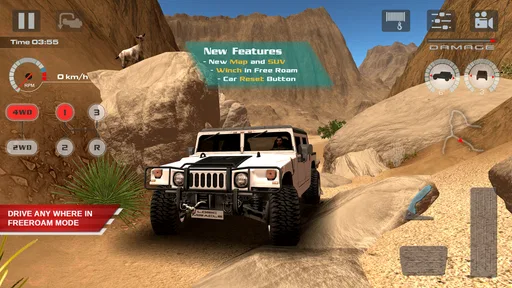
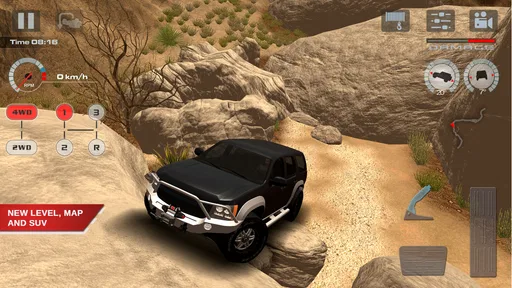
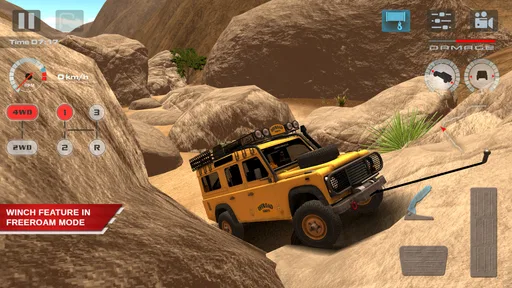
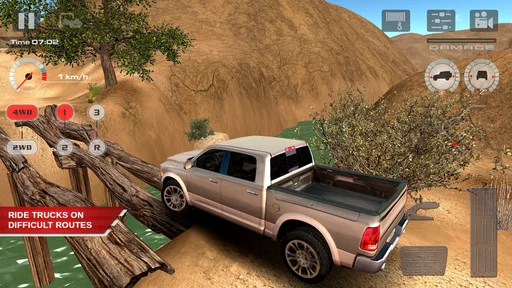
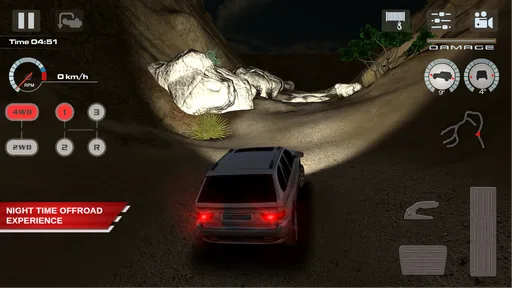
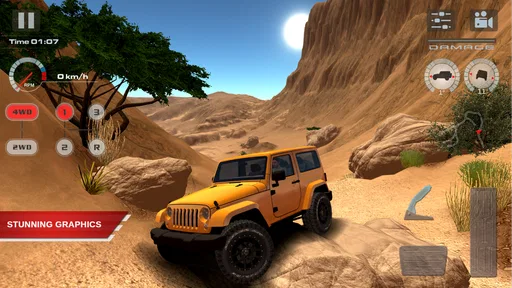
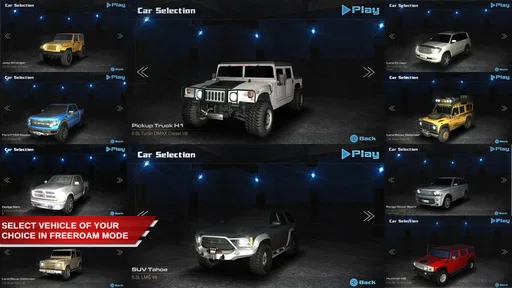
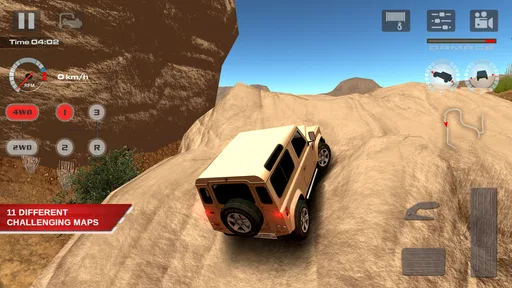
 Analysis by AppCompare
OffRoad Drive Desert is the kind of racing game that makes a strong first impression by asking a simple question: can I keep a 4x4 truck under control when the ground is working against me? I spent time with it expecting a quick arcade drive, but its appeal is closer to handling a stubborn off-road vehicle than chasing perfect lap times. The desert setting, weighty movement, and suspension-focused driving give each climb and turn a more physical feel than the usual pick-up-and-go racer.
That difference matters because this is not trying to replace a polished circuit racer or a huge open-world driving game. It is a compact, focused experience from LogicMiracle, built around desert off-road driving and realistic-feeling vehicle behavior. I found the best moments came when I stopped treating the truck like a sports car and started planning every change of direction. If you enjoy learning how a vehicle reacts, there is something satisfying here. If you want instant speed, constant rewards, and a large variety of cars, the limitations become clear quickly.
What makes the first week appealing
The opening appeal comes from the truck itself. Acceleration, turning, braking, and uneven terrain feel connected rather than completely separate. When the surface changes, I had to make smaller steering corrections and give the vehicle room to settle. That makes a simple desert route more engaging than it looks in a short description. The game’s emphasis on 4x4 handling and suspension is not just decoration; it is the reason to keep playing after the novelty of the scenery wears off.
My first useful adjustment was to stop holding the steering input too long. A broad turn can become a slide or an awkward correction if I react late, especially when the truck is moving over irregular ground. Gentle inputs are more reliable than dramatic swerves. This is one of those games where a slower, controlled approach often produces a better run than trying to force speed through every section.
The desert environment also gives the driving a clear identity. There is a difference between navigating open ground and following the clean racing line expected in a conventional track game. I paid more attention to the shape of the route, the angle of an approach, and how much momentum I wanted before a climb. That makes the game approachable for someone who likes driving games but does not necessarily want complicated vehicle tuning or competitive multiplayer pressure.
It is worth setting expectations about presentation. OffRoad Drive Desert is an older mobile release, first appearing on April 20, 2016, and its current version is 2.3. I did not approach it expecting the visual polish, menus, or smooth progression of a recent premium racing production. Its appeal is the driving idea rather than modern spectacle. On a compatible device running Android 6.0 or later, the experience is easy to understand, but the age of the project can be felt in the overall finish.
The game is listed at $2.99, which changes how I judge it. I am more forgiving of a modest feature set when the purchase is a straightforward entry into a specific driving style, but I also expect the core loop to remain enjoyable without relying on constant novelty. During the first few sessions, it does enough to justify attention: the truck feels distinctive, the desert creates a recognizable challenge, and improving control is more rewarding than simply memorizing a track.
Worth Reading Before You Choose

Switching to Android Auto Means Rethinking Your Driving Routine

Google Calendar Makes a Crowded Week Easier to Manage

Baby Panda World Brings Quick Play to Modern Phones, but Its Game Library Feels Busy

ESPN’s Live Game View Makes Following Close Games Easier

QuizzLand Review: A Good Fit for Short Trivia Breaks, Not Every Player

Basketball Stars: Multiplayer Is Fast, but Can It Recover When Matches Go Wrong?
Learning the truck instead of fighting it
A useful way to begin is to treat the first runs as practice rather than tests of speed. I watched how quickly the truck responded after a steering change, how much braking affected its balance, and whether a turn was easier when approached from a wider angle. This approach reduces frustration because mistakes become information. I could usually identify whether I had entered too quickly, turned too sharply, or failed to leave enough space for the vehicle to recover.
That learning process is the game’s strongest early hook. Many mobile racers give me a feeling of immediate control but little reason to refine it. Here, the truck’s physical behavior creates small problems to solve. The trade-off is that the same behavior can feel awkward when the controls do not match my expectations. Players who prefer a very responsive, almost weightless vehicle may read the suspension and momentum as sluggishness rather than realism.
For a short everyday session, that can be a benefit. If I had only a few minutes, I could focus on one route and try to make cleaner decisions instead of committing to a long campaign. The game suits a quiet break, a commute when playing is practical, or a moment when I want something more involved than an endless tap-based racer. It does not demand that every session become a major event.
Who will enjoy the early experience
I would recommend the first-week experience to players who like off-road driving, deliberate steering, and the feeling of managing a heavy vehicle. It is also a reasonable choice for someone who wants a paid mobile game without the usual emphasis on competitive systems or an endless stream of unlock prompts. The Everyone content rating makes it broadly accessible, although younger players may need patience because the truck does not always behave as instantly as an arcade vehicle.
I would be more cautious with anyone looking for licensed cars, detailed customization, online competition, or a broad selection of racing disciplines. Those players will probably find a conventional arcade racer more satisfying. The game’s identity is narrow: desert driving with a 4x4 truck. That focus is welcome during the first sessions, but it also determines how much room there is for the experience to grow.
What remains after the novelty fades
The month-to-month question is harder than the first-week question. Once I understood the basic handling, the main source of value became personal improvement. I could return to a familiar route and try to drive it with fewer corrections, better momentum, and less hesitation. That kind of repeat value is real, but it depends heavily on whether I enjoy practicing the same underlying skill rather than collecting new content.
This is not a game I would keep installed for a daily reward routine. Its recurring appeal is more occasional and intentional. I might play it when I want a focused driving challenge, then leave it alone for several days without feeling that I have fallen behind. That is a positive for players who dislike games that turn leisure into a maintenance schedule. It is less positive for anyone who expects a long-term progression path to provide a new reason to return every day.
The distinction between habit and maintenance is important here. A good habit would be opening the game because I genuinely want to improve my driving. Maintenance would be opening it because the game is asking me to preserve a streak, claim a timed reward, or manage a growing collection. OffRoad Drive Desert works better as the first kind of game. Its lasting value comes from the driving itself, not from external obligations.
One practical workflow helped me get more from it: I separated learning runs from speed runs. On a learning run, I concentrated on where the truck became unstable and remembered which approach felt safest. On a speed run, I tried to preserve momentum without repeating those mistakes. Mixing both goals at once made me overdrive and lose control. This simple split turns short sessions into a more deliberate practice loop and is more useful than simply restarting after every error.
Another tip is to judge a route by consistency rather than by one lucky attempt. A fast run that depends on a risky correction does not tell me much about whether I have actually learned the terrain. When I could repeat a section with similar control, the improvement felt more meaningful. That is a subtle strength for a small racing game: it rewards attention to technique, even without the elaborate coaching systems found in larger titles.
The cost of keeping it installed
The maintenance burden is low in the everyday sense. I do not need to manage a complicated garage, study a large collection of vehicle statistics, or keep up with a demanding competitive calendar. The game is easy to return to after a break because its central lesson remains understandable: control the truck, respect the terrain, and avoid wasting momentum.
There is still a different kind of burden: the need to supply my own motivation. A larger racing game can distract me with new vehicles, changing events, upgrades, or social competition. This one asks me to find satisfaction in cleaner driving. If I am not naturally interested in that, the experience can feel repetitive sooner than I would like. The absence of a broad surrounding structure is relaxing for some players and thin for others.
The paid model also affects maintenance expectations. At $2.99, I see it as a small, self-contained purchase rather than an app I should evaluate through a long-term free-to-play economy. That makes the decision simple: either the off-road driving is appealing enough to justify the price, or it is not. I would not buy it expecting a constantly expanding service. I would buy it for the specific handling concept and accept that the content focus is limited.
Its audience size suggests a modest niche rather than a dominant mobile racing community. The game has more than 10,000 installs, an average rating of 3.7 from around 1,700 ratings, and 101 written reviews. Those figures do not change how the truck drives, but they help frame the product: this is a specialized title with a smaller footprint, not the obvious default for everyone who searches for racing games.
Where fatigue begins
The biggest source of fatigue is repetition without enough variation in the surrounding experience. The desert theme is appropriate, but a single strong setting can begin to feel visually and mechanically narrow once the handling has stopped surprising me. If I am not setting personal goals, such as improving a difficult section or completing a cleaner run, I can run out of reasons to continue.
Control friction is another potential problem. A physics-oriented vehicle can be satisfying when my inputs feel precise, but frustrating when the truck seems to resist a correction or takes longer to settle than expected. I found that the game rewards patience, yet that patience is not equally enjoyable for everyone. Players accustomed to highly assisted steering may interpret the same behavior as poor responsiveness.
The game can also be a poor fit for sessions where I want immediate excitement. A conventional arcade racer usually provides a stronger sense of speed, sharper feedback, and more obvious short-term rewards. A simulation-heavy off-road title may offer deeper vehicle systems and a wider world. OffRoad Drive Desert sits between those options: more physical than a casual racer, but not necessarily as broad or sophisticated as a large simulation.
That middle position is both its advantage and its weakness. I liked that I could understand the basic idea quickly without being buried in settings. At the same time, players who want a complete off-road career may feel they have reached the limits of the experience before they are ready to stop. The game is best judged as a focused driving toy with room for practice, not as a replacement for every other racing game on a phone.
Choosing it over the usual alternatives
Compared with an arcade racer, this game asks for more restraint. I cannot rely as much on aggressive cornering or constant acceleration because the truck’s movement carries consequences. That makes it a better choice when I want to think about lines and momentum, but a worse choice when I want a quick burst of uncomplicated speed.
Compared with a full off-road simulator, it is easier to approach. I do not need to commit to a large learning project before I can enjoy a drive. The trade-off is depth: a specialist simulator may give more room for vehicle setup, terrain variety, or long-term mastery. I would choose this game for a compact, direct encounter with desert truck driving, not for a complete virtual motorsport hobby.
Compared with free racing games built around progression, the $2.99 purchase removes some of the pressure to keep checking in. That is valuable if I want a game that waits for me. But free alternatives may offer more cars, events, and changing objectives, even if they also bring more distractions. The right choice depends on whether I value a focused core loop or a larger stream of content.
Questions I would ask before paying
Will it run on an older Android phone? The stated minimum is Android 6.0, so the requirement is not aimed only at recent devices. Even so, I would keep expectations realistic about performance and presentation because the game originated in the mid-2010s. The age makes compatibility more approachable, but it does not turn the graphics into a modern showcase.
Is it suitable for a child? The content rating is Everyone, which makes it broadly appropriate from a content standpoint. The more relevant question is patience. A child who enjoys careful driving and retrying a difficult section may have fun, while one who expects instant acceleration and forgiving turns may lose interest quickly.
Does it make sense without playing every day? Yes, and that is one of its better qualities. I can return after time away and resume practicing without needing to remember a complicated economy or a long list of active tasks. Its weakness is that the game does not always create a strong reason to return unless I personally enjoy refining my technique.
Is the purchase worthwhile? For me, it depends on how specifically I want desert 4x4 driving. The price is modest, but the focus is narrow. If the idea of managing a heavy truck over rough ground already sounds appealing, the core can justify the purchase. If I am simply searching for “a racing game,” I would compare it with broader alternatives before spending money.
My long-term verdict
OffRoad Drive Desert earns lasting space only when its physical driving is the reason I am opening it. The first-week appeal is clear: the truck feels different from a lightweight arcade car, the desert gives the routes character, and careful control produces a satisfying sense of progress. I also appreciate that it can fit into short sessions without demanding a daily routine.
Over a longer period, however, the game depends on self-directed goals. Its recurring value comes from improving consistency, experimenting with approaches, and enjoying the feel of the vehicle. It does not have enough breadth to satisfy everyone who wants a constantly changing racing service. The same narrow focus that makes it distinctive can make it tiring once I no longer feel curious about the handling.
I would recommend it to a patient driver who wants a compact off-road challenge and prefers a paid game with a clear central idea. I would skip it in favor of a broader racer if I wanted many cars, a busy progression system, or a strong sense of constant discovery. LogicMiracle has made something specific rather than universal, and that is the fairest way to approach it.
My final view is positive but measured. This is not a game I would insist every mobile player needs, yet it has a genuine personality. When I play it as a short practice session instead of expecting an endless content machine, the rough desert driving remains enjoyable. It earns a place on my device for occasional returns, especially when I want to focus on control and momentum rather than simply chase speed.
Pros
- Realistic off-road physics make every climb and descent feel engaging.
- Large desert environments encourage exploration beyond the main routes.
- Varied terrain provides a good challenge for experienced driving-game fans.
- Vehicle controls are easy to learn
- even for players new to simulation games.
- Offline play makes it suitable for gaming without a constant internet connection.
Cons
- Some vehicles and upgrades may require significant in-game grinding.
- Graphics can look dated on newer phones and tablets.
- Long sessions may feel repetitive because of the desert-focused setting.
- Steering can feel imprecise when using touch controls on smaller screens.
- Occasional camera issues may make narrow obstacles harder to navigate.
FAQs for OffRoad Drive Desert
What is OffRoad Drive Desert?
OffRoad Drive Desert is an off-road driving game focused on exploring harsh desert environments with powerful 4x4 vehicles. Instead of regular road racing, the game emphasizes climbing dunes, crossing rough terrain, managing difficult routes, and reaching objectives through challenging landscapes. It is designed for players who enjoy slower, more technical driving and vehicle control rather than traditional arcade racing alone.
Can I play OffRoad Drive Desert without an internet connection?
OffRoad Drive Desert may support offline play for its main driving and exploration activities, which is useful when you are traveling or have limited mobile data. However, some features can depend on an internet connection, including advertisements, updates, online services, or certain promotional content. After installation, it is worth launching the game once while connected so that all required files finish downloading correctly.
What type of vehicles and driving challenges are included?
The game generally centers on off-road vehicles built to handle sand, hills, rocks, and uneven desert paths. Driving challenges are based on maintaining control, choosing suitable routes, climbing difficult slopes, and avoiding obstacles rather than simply driving at maximum speed. Vehicle performance can vary, so learning how each model responds on different surfaces is an important part of progressing through the game.
Is OffRoad Drive Desert suitable for beginners?
Beginners can enjoy OffRoad Drive Desert, although the controls and terrain may require some practice. Desert driving is less forgiving than normal racing because turning too sharply, approaching a slope with insufficient momentum, or choosing a poor route can leave the vehicle stuck. New players should start carefully, experiment with the control settings, and focus on learning the terrain before attempting the most demanding challenges.
Does OffRoad Drive Desert contain advertisements or in-app purchases?
The availability of advertisements and in-app purchases can depend on the version of OffRoad Drive Desert, the device platform, and regional settings. Free mobile games commonly display ads between activities or offer optional purchases for vehicles, upgrades, currency, or other conveniences. Before downloading, check the current Google Play or App Store listing for the latest monetization details and review any purchase requirements carefully.


